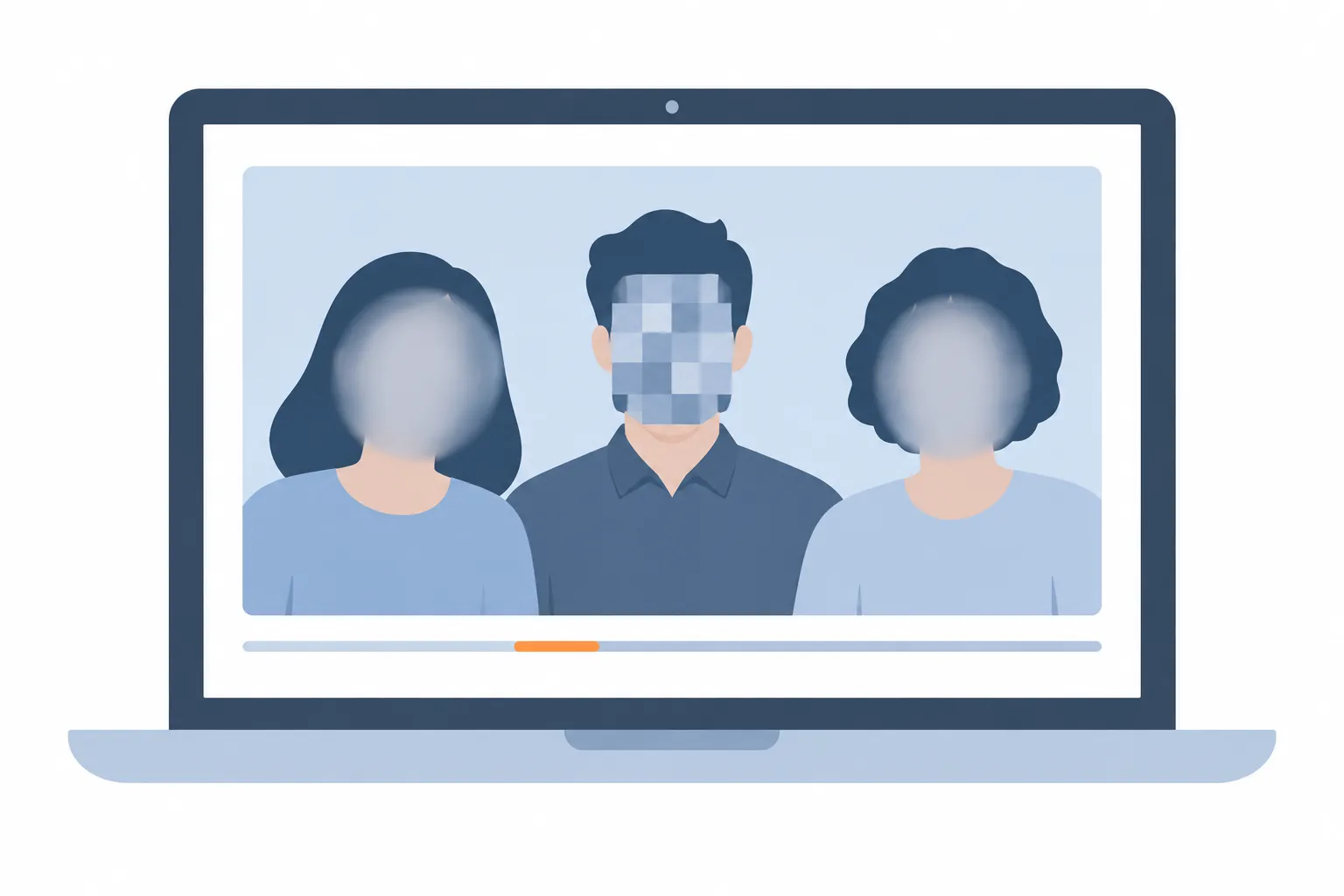
Why a solid cover is different from blur
Blur and mosaic transform the pixels; with enough effort or a known set of candidates, a weak blur or tiny mosaic can be partly reversed. A solid cover replaces the pixels with one opaque colour, so the information is gone from the file and no algorithm can bring it back. For complaints, evidence, workplace recordings or anything you may have to hand to a third party, this is the setting to use.
The cover follows the confirmed face outline (an oval along the chin, cheeks and forehead) plus the padding you set; raise Padding to 15–20% to include hair and ears.
What a cover does not hide
Clothing, tattoos, gait, voices, name badges, screens and reflections can still identify a person. Mute the sound if voices matter, and draw manual regions over badges, plates or screens; a manual region can be a rectangle or an ellipse and can follow movement with keyframes.
Faces the detector misses stay visible: profiles, turned heads, small or motion-blurred faces and faces in mirrors are the usual cases. The orange review sections point to uncertain moments, but only a full play-through confirms the result.
Working with hand-drawn regions
Press Edit regions, drag on the video to draw, then adjust the start and end time in the panel. A region is static by default; press "Add/update keyframe at playhead" at a later time and move it, and the cover glides between the two positions. Delete and undo are always available.
Each region keeps its own method, so a video can combine solid covers on some people with blur on others.
Formats and limits
MP4 with H.264 or HEVC video, up to 5 minutes, 500 MB, 4K and 30 fps, one AAC sound track or none. The result is an H.264 MP4 with the original sound copied byte for byte (or muted) and no original metadata. Chrome or Edge on a computer; Android Chrome with lower limits.